AAG and Partners Lead Large-Scale Mangrove Restoration to Strengthen Climate Resilience in Ghana's Coastal Communities

As Ghana faces increasing threats from coastal erosion, flooding, and climate change, ActionAid Ghana and its partners have launched a major mangrove restoration initiative under the Improved Resilience of Coastal Communities (IRCC) Project, with 95,300 mangrove seedlings already planted in the first phase of implementation.
The restoration exercise, launched in the Anloga District, forms part of a broader effort to restore 410 hectares of degraded mangrove ecosystems while improving climate resilience for vulnerable coastal communities through nature-based solutions and climate-resilient infrastructure.
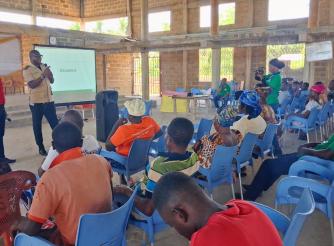
The launch brought together the District Chief Executive for Anloga, Hon. Sandra Kpedor, representatives of the Forestry Commission, Environmental Protection Agency (EPA), Habitat for Humanity International (HFHI), Traditional Authorities, community leaders, Assembly Members, volunteers, and the media, underscoring the importance of multi-stakeholder collaboration in addressing Ghana's growing climate challenges.
Speaking at the ceremony, Hon. Sandra Kpedor commended ActionAid Ghana, UN-Habitat, and Habitat for Humanity International for supporting the district's climate resilience efforts. She urged communities to safeguard the restored mangrove areas, emphasizing that healthy mangrove ecosystems are essential for reducing coastal erosion, mitigating flooding, protecting biodiversity, and sustaining livelihoods.
The urgency of the intervention is supported by national and global evidence. According to the Forestry Commission of Ghana, Global Mangrove Watch, the IUCN Red List of Ecosystems Programme, and the Ramsar Information Service, Ghana has an estimated 13,000–14,000 hectares of mangrove forests, primarily within the Volta Delta, Keta Lagoon Complex, Songor Lagoon, Densu Delta, Muni Lagoon, and Ankobra Estuary. At the same time, more than 60% of Ghana's coastline is vulnerable to erosion and flooding, making mangrove restoration a critical climate adaptation priority.
These ecosystems continue to decline due to unsustainable harvesting for fuelwood and fish smoking, urban expansion, salt mining, pollution, and climate change. The Volta Delta, where the IRCC Project is being implemented, is recognised as one of West Africa's most important coastal wetland ecosystems, supporting thousands of people through fishing, farming, and salt production.
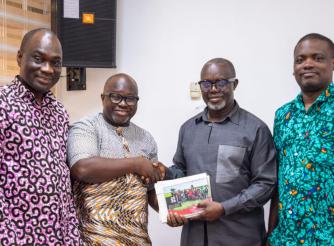
Reinforcing ActionAid Ghana's commitment to climate justice, Malik Gbene, Quality and Knowledge Manager, highlighted the importance of community ownership in restoring degraded ecosystems.
"At ActionAid Ghana, we believe that climate justice begins with community-led action. As mangroves are harvested for various commercial purposes, it is our collective responsibility to restore what is lost by planting new seedlings. By investing in mangrove restoration today, we are protecting livelihoods, strengthening coastal resilience, and safeguarding the environment for future generations."
Following the launch, community planters and volunteers immediately began restoration activities across Atiteti, Agbledomi, and Dzita, where 95,300 mangrove seedlings have already been planted. The project also includes the construction of drainage channels, bioretention basins, and micro-infiltration cells to improve flood management and enhance resilience against climate-related disasters.
The Improved Resilience of Coastal Communities (IRCC) Project is implemented by ActionAid Ghana in partnership with UN-Habitat, Habitat for Humanity International (HFHI), the University of Twente, and the Ministry of Environment, Science and Technology (MEST), with funding from the Adaptation Fund.
As Ghana continues to confront the growing impacts of climate change, the IRCC Project demonstrates how community-led nature-based solutions can restore ecosystems, strengthen livelihoods, and protect coastal communities for generations to come.
Written by Jacqueline Pardikie Parditey